The Pope and the Plan

On May 8, 2025 two momentous events happened. In Rome, the College of Cardinals elected an American Pope. Minutes before the white smoke appeared Vatican experts were on television saying it would never happen. And then it did.

Later that evening in Milton, our Planning Board voted to advance a zoning plan that met the state’s requirements for our town after many of us saying that it would never happen. I believe I heard church bells ringing in town, perhaps celebrating both votes!

While Pope Leo XIV celebrates a week on the job, Milton’s compliant zoning plan didn’t make it that far. On May 13th, our Planning Board took a highly unusual step and rescinded its vote, deciding to advance another plan that is out of compliance with the state law and zones for 60% less housing than the state has required.

Pray for us.

The now-rescinded plan would have brought us into compliance, sparing East Milton residents who voted overwhelmingly against the previous plan in 2024, and creating multi-family zoning districts in more neighborhoods in West Milton. It is not a perfect plan but it is a good, thoughtful plan crafted by Planning Board member Cheryl Tougias (the lone voice of compliance on our Planning Board) and the town’s expert consultants from Utile.

What comes next is anyone’s guess. Milton is at risk of missing yet another state deadline. And being sued once again. And continuing to lose out on state grants, the latest being the loss of a grant for a van for our Council on Aging. Outgoing Select Board member Erin Bradley tallied the total cost to Milton so far as over $1.1 million in legal fees and lost grants.

Pray for us now.

There is hope beyond the prayers. While two incumbents were returned to the Planning Board, two new members were elected to the Select Board and a new Town Moderator was elected as well. Town Meeting is strongly in favor of following the law. But zoning articles must pass through the Planning Board and four of the five members seem to be doing everything in their power to avoid our responsibility to follow a state mandate.

Pray for us.

Pray for a kind and benevolent special master appointed by the Attorney General if we continue to resist. Pray for state officials with short memories when we do eventually comply and the state evaluates funding requests from Milton for vans, schools, public safety, and more. And pray for our neighbors who need more housing options in a town that hasn’t grown in over fifty years. Our population in 1970 was 27,190; today it is 28,811 – a 0.1% annual growth rate. For comparison, neighboring Canton has grown by over 7,000 residents in that time; Sharon over 6,000.

An American Pope and a compliant zoning plan turned out to be too much to expect in one day. But Rome wasn’t built in a day. Milton will be in compliance, consistent with being a rapid transit community. It will be a day in the future. And it will be a day!
Friday Night News Dump

News out of Milton tonight is that a local elected official has filed public comments on the MBTA Communities Act regulations. Ok, that elected official is me! What else would one do on a Friday night in between snow events?

As a Milton resident and elected town meeting member for the past twenty-five years, I write to offer the following comments on MBTA Communities Act regulations.

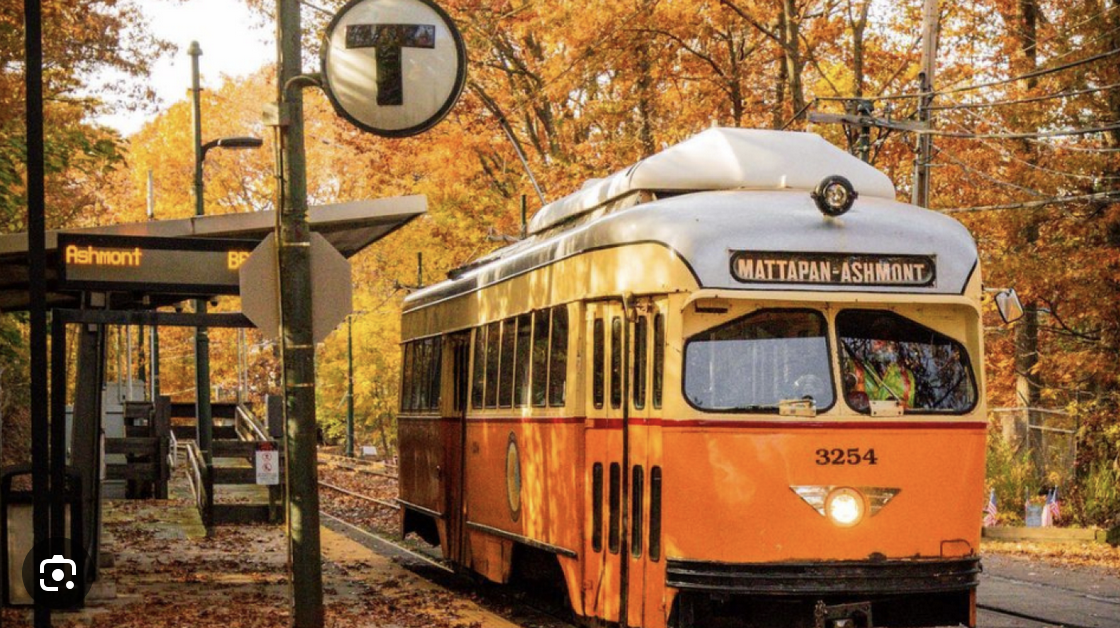
The updated definition of “Subway station” to include any of the stops along the MBTA Red Line, Green Line, Orange Line, or Blue Line, including but not limited to the Mattapan High Speed Line and any extensions to such lines is a welcome clarification. Our Mattapan trolley fits any reasonable definition of rapid transit because it runs on a frequent and regular schedule and operates on an exclusive right-of-way. Nevertheless, it has been the target of many opponents of this law, drawing much scorn and ridicule as a broken down relic.

Most of those critics in our town don’t ride the trolley. As an occasional rider on the Mattapan trolley, I am able to commute from Milton to downtown Boston in less time than it takes embarking from some of the stops on the Green Line. This dedicated transit line is a valuable resource to Milton residents (as well as Mattapan and Dorchester residents) and clearly qualifies as a subway station for the purposes of this law which is designed to create multi-family housing opportunities close to jobs and transit. The trolley is old and occasionally cranky but it is notable that the MBTA has clear plans to upgrade the trolleys and the line in the coming years. According to the MBTA’s website, over the next eight to 10 years, they will modernize stations and improve infrastructure throughout the Mattapan Line. This includes introducing the next generation of vehicles to the line, the Type 9 light rail vehicles used on the Green Line. Milton is a rapid transit community now and will remain one in the future and should be treated as such under these regulations.

The requirement that Milton and other rapid transit communities create a zoning plan allowing for Multi-family unit capacity equal to or greater than 25% of total housing units is reasonable, especially when you consider that build-out will take many decades and towns may never reach the upper limit of that zoning capacity. Milton must do its part to create housing opportunities in a state where it is increasing hard to afford rents or home prices. Housing supply is vital to our economic health as a town, region and state.

I applaud the provision of the regulations that permits the Executive Office of Housing and Livable Communities, in its discretion, to allow towns to approve a greater percentage of affordable units, or deeper affordability for some or all of the affordable units, if it meets certain conditions. Those conditions are necessary so that so that towns don’t attempt to “game” the system by requiring an affordability percentage that ensures no multi-family housing gets built. But it also allows towns like Milton, where the market is strong, to exceed the 10% affordability requirement and provide more opportunities to low- to moderate-income residents. In fact, this was one of the few areas of agreement between the “yes” and “no” campaigns during last year’s town-wide referendum on the zoning plan passed by Milton town meeting in December 2023. Thank you for providing this important flexibility in the regulations.

Additional flexibility is shown in the regulations by allowing certain communities, including Milton, to craft a Multi-family zoning district with at least 50 percent of the district’s minimum Multi-family unit capacity located within the Transit station area while the remaining capacity can be elsewhere in town. As you know, this was a crucial nod to the Town of Milton since our trolley line is adjacent to Boston and much of our zoning capacity would otherwise be in Boston and not eligible for rezoning by the Town of Milton. I appreciate the state listening to town officials and incorporating this flexibility into the regulations. One size does not fit all and this flexibility is a necessary and welcome relief to communities that have unique circumstances like a trolley line on the town’s border.

My final comment concerns the deadlines that apply to Milton. February 13, 2025 is Milton’s deadline to submit an action plan and July 14, 2025 is our deadline to submit a District Compliance Application. Our town has had several years to comply. Some of our elected officials have not used that time wisely. Certain elected officials in Milton have chosen to litigate instead of legislate. Other communities (117 as of this writing) have chosen to comply and the state should not allow Milton to further delay full compliance. Milton has had enough time to come up with a plan. Now Milton needs to be compelled to do so.

Never gonna give you up

“Never gonna give you up
Never gonna let you down
Never gonna run around and desert you
Never gonna make you cry
Never gonna say goodbye
Never gonna tell a lie and hurt you“

– Rick Astley, 1987

At last night’s Milton Town Farm review committee, our first meeting after being appointed last August, I learned about a couple of new readers of this blog. Those readers don’t like my blog posts [but they do boost my stats – thank you]. And some of those readers think I should give you up. More specifically, they don’t appreciate my coverage of town committees and boards and my critique of certain actions and statements made by elected officials and activists in town.

Up until last night, it had been a good week for bloggers. Trump’s new press secretary invited bloggers to apply for White House press corps credentials. No worries. I’m never going give you up. I’ve written for publication for nearly 50 years and bad reviews have not stopped me before and won’t now.

What happened last night other than the fifteen minute convo on my blogging? I lost a vote to become vice-chair of the committee. C’est la vie. We set a next meeting date of March 12th at 7pm and a Saturday, February 22 site walk at 10am. And we had a very preliminary discussion about Request For Proposals, geological surveys, traffic studies, affordable housing, fiduciary responsibilities and serving the poor. All very respectful and professional, bloggers notwithstanding.

Watch this space. And for those who are reading this for a Rick Astley fix, here you go.

Which candidate for governor will make closing the racial homeownership gap a campaign centerpiece?

“One of the best and most effective ways you can build wealth is through homeownership, and the data has shown time and time again that people of color have not had the same access to federal programs that whites have had. We have an opportunity to do something about that. We should do it with [ARPA] funding. And we should do it now.”

That strong and specific statement was spoken by Republican Governor Charlie Baker who has made closing the racial homeownership gap a focus over the past year. While Baker is justifiably focused on the issue, it is noticeable that he hasn’t had as much success in getting Democrats to join him. A legislature dominated by Democrats reduced his proposed spending on his race-conscious homeownership strategies from $500 million to $180 million when they voted on the first round of American Rescue Plan Act spending.

Last year when Michelle Wu and Annissa Essaibi George battled in the Boston mayor’s race, both women talked a lot about closing the racial homeownership gap. They took notice of the thousands of voters who are flocking to first-time homebuyer classes in Boston and across the state. They endorsed specific solutions. They talked about this issue repeatedly and effectively.

What will our candidates for Governor do this year? Buying a home in Massachusetts has never been harder. Our statewide median home price has topped $500,000 behind just Hawaii and California but without the weather. Last week the Greater Boston Association of Realtors said the median price of a single-family home hit $750,000 in 64 cities and towns in eastern Massachusetts. Our wide and persistent racial gap is stubbornly large. Nearly 7 out of 10 white households own their own home in Massachusetts. Just 35 percent of Black, Latinx and Asian households are homeowners in our state.

So why aren’t we hearing more about this from our statewide candidates? Tens of thousands of homebuyers are desperate to buy a home in Massachusetts and finding it increasingly impossible. To be fair, Sonia Chang-Diaz and Danielle Allen have strong language on their websites endorsing closing “…the racial wealth gap and create more opportunities for lower- and middle-income families to build generational wealth through homeownership” [Chang-Diaz] and “…increase down payment assistance for first-time home-buyers, with prioritization on first-generation home-buyers” [Allen]. Maura Healey’s website is not yet built out with an issue section but her announcement video doesn’t mention housing at all.

Why isn’t housing in general and homeownership specifically more of a statewide issue? It could be that many of our statewide candidates play to the voter-rich suburban communities where 8 or 9 out of 10 households are already homeowners and benefit from ever increasing home values. It could be the paucity of representation of elected officials of color in the State House. People of color account for one-third of the residents in Massachusetts, but just 14% of House reps and 7.5% of state senators. It is undeniably a hard issue to solve with the need to build many more homes which will meet with not-in-my-backyard protestations and the necessary infusion of billions of dollars in new investment. Fixing health care or education or transportation is equally daunting, yet those issues seem to get more attention from our elected officials.

We should expect more in Massachusetts. We sit near the bottom of the pack in the United States with our wide racial homeownership gap. The gap will not close itself. In fact, given the inter-generational transfer of wealth that homeownership provides, the gap will get worse unless we take intentional action to close it. The kind of action and leadership that can be provided by a Governor. Or a candidate for Governor.

Citibank in Boston – a postmortem

Much was made of Citibank’s entry into the Boston market in 2006. The bank splashily, and expensively, attached its name to the Wang Center which became the Wang Theater at the Citi Performing Arts Center. Citi opened its first branches in 2007 and soon had 30 in the greater Boston region.

And it had a strategy as well. We will “follow our Smith Barney customers” in Boston. So, the bank established branches in over-banked communities like North Andover (seven branches), Newton (over twenty), Wellesley (seventeen), Needham (ten), Lexington (sixteen) and Brookline (eighteen) eschewing comparatively under-served working class locations such as Dorchester, Roxbury, Brockton and Lawrence. By 2012, Citigroup had sold Smith Barney to Morgan Stanley taking a $2.9 billion write-down in the process.

Citi also never seemed to understand the Massachusetts market. The bank did not offer first-time mortgage programs through either MassHousing or the Massachusetts Housing Partnership. Instead, Citi made feeble attempts to offer “HomeRun”, a promising portfolio mortgage product that could not be used to purchase triple-deckers that populate many urban neighborhoods here.

What lessons have been learned for mega-banks trying to make it in Boston? Don’t come if you are not ready to embrace the local market – the whole market, leafy suburbs and city streets. Don’t invite fair lending scrutiny by refusing to lend on a large part of our housing stock. Naming rights only get you so far. The hard work is building relationships one customer at a time and Citi was unable to make that work.

Good neighbors

What makes a good neighbor? Someone you can rely on in a pinch? Someone that will keep an eye on your house while you’re away? The type of person you would invite over for a beer and a barbeque?

What about a neighbor who will support an affordable housing “monstrosity” when others in the immediate vicinity of said development are opposed? Certainly, he can’t be a good neighbor.

That was me tonight. Tonight was hard. It was tough. It is always tough to be the lone voice in a public hearing. But when a dozen of your fellow townspeople are pouring their hearts out to the Board of Appeals about how this particular 90 unit mixed income development will destroy their quality of life, it is especially difficult.

They are wrong, of course. Well, not wrong on all fronts but their predictions of doom will not come to pass should this development get built. Studies and 40 years of experience with Chapter 40B in Massachusetts prove that predictions from critics (almost always abutters) never come to pass. There are almost always less children in the public schools than opponents claim. Traffic somehow manages to flow despite dire forecasts of gridlock and accidents. Trees grow, wetlands survive, and people adapt.

It won’t be the same, of course, but hardly anything ever is the same. And change can often mean positive change. It looks like the hospice on Randolph Avenue in Milton not far from the proposed 40B is a positive change. St. Elizabeth’s old rectory was a deteriorating eyesore that did nothing for the town or the property value of its neighbors. Goodness knows we all will welcome the change when and if the Hendries site is ever redeveloped.

But it is tougher when turkeys and deer occupy the woods surrounding the proposed site. It is harder to find the positive change. But 23 affordable apartments renting from $1,100 to $1,600 to households of modest means is a positive change in Milton. Moving the needle on the state’s Subsidized Housing Inventory from 4.9% to 5.8% with just one development is a positive change. Moving ever closer to joining towns like Canton, Dedham, Cohasset, Lexington, and Concord that have reached 10% on the state’s SHI is a positive change.

Tonight was hard. Some of the arguments made by opponents were over the top. “We will all have blood on our hands” if this development is approved, said one neighbor suggesting that people will die in traffic accidents due to the development. Route 28 is indeed a dangerous stretch of road and people do die in traffic accidents on that road each year. But implying that public officials (state and local) will have blood on their hands if this development is approved is demagoguery at its worst.

Police won’t enforce local traffic laws in the vicinity of the proposed development because “a source inside the department” tells Jonathan Hall (of WHDH-TV and a neighbor to the proposed 40B) that Milton backed off because of a Globe spotlight series on the racial imbalance of traffic stops in town several years ago. He went on to say that a disproportionate number of Blacks were being stopped “on their way to Blue Hill Ave.” Interesting sourcing on this story for someone who makes his living reporting the news. Also interesting given that both my wife and I have been deterred from violating the traffic laws by the presence of the same police department on the streets Mr. Hall claims that they don’t visit.

All of the criticisms weren’t over the top. Many expressed concern about fire truck access, school bus access, and pedestrian access to bus stops. Very legitimate concerns that the developer either has or will need to address. Addressing the housing affordability crisis in greater Boston happens on the ground in a seeming endless number of hearings like what happened tonight in Milton. Progress is slow and it is hard.